Ray Stevenson, who played evil governor of Delhi in ‘RRR’, passes away at 58

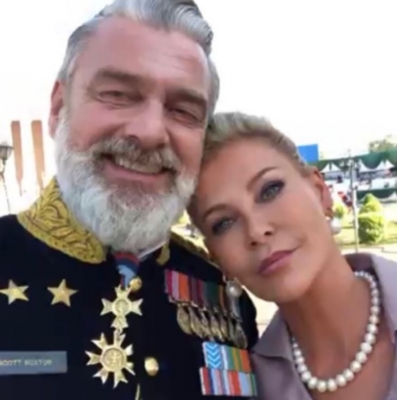
London, May 23: Ray Stevenson, the Irish actor who played the evil and authoritarian governor of Delhi in S.S. Rajamouli’s ‘RRR’, passed away on Sunday, reports ‘Variety’. He was 58.
No information on or the cause of the death was available. Though well-known in India for his ‘RRR’ role opposite ‘Indiana Jones and The Last Crusade’ actress and Bond girl Alison Doody, Stevenson will be remembered for playing Volstagg in Marvel’s ‘Thor’ franchise.
Stevenson, according to ‘Variety’, began his career appearing on TV shows in the 1990s and then began landing action roles in Hollywood films starting in the 2000s.
His first major film role came in Antoine Fuqua’s 2004 adventure movie ‘King Arthur’, where he played Dagonet, one of the Knights of the Round Table. In the film, his character sacrifices himself in battle to help Arthur (Clive Owen) and his brotherhood of warriors, says ‘Variety’
In 2008, Stevenson landed a starring role in the Marvel film, ‘Punisher: War Zone’, where he played the titular mercenary, aka Frank Castle, adds ‘Variety’. The film was distributed by Lionsgate in North America, before Disney acquired the rights to the Marvel universe and later re-introduced the character in the Netflix series ‘Daredevil’.
Before his death, Stevenson starred in the upcoming action-adventure limited series, ‘Ahsoka’, a spin-off of ‘The Mandalorian’ from the Star Wars franchise. He played Baylan Skoll, a former Jedi who survived Order 66 by fleeing into the Unknown Regions. He is a master to Shin and ally to Thrawn. This was to be his last role.