‘Defining moment in India’s freedom movement’: VP Radhakrishnan, PM Modi on historic Dandi Satyagraha

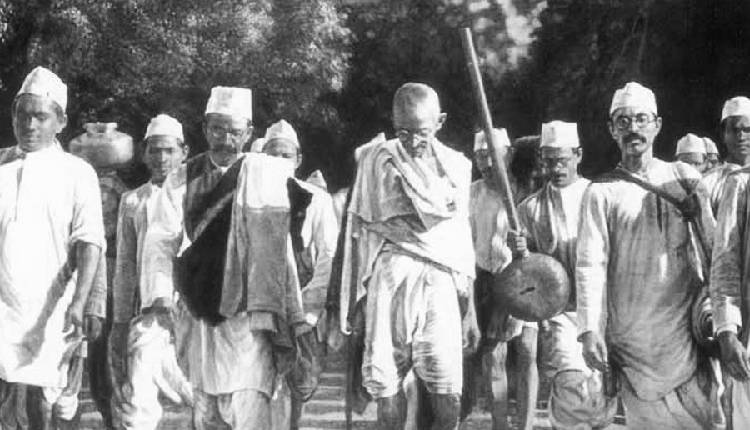
New Delhi: Vice President C.P. Radhakrishnan and Prime Minister Narendra Modi on Thursday paid homage to Mahatma Gandhi and all the brave freedom fighters who took part in the historic march ‘Dandi Satyagraha.’
PM Modi took to social media ‘X’ and said, “The Dandi March began on this day in 1930. We respectfully remember all the great personalities involved.”
Vice President C.P. Radhalkrishnan also took to social media ‘X’ and said, “The historic Dandi Satyagraha, launched on this day in 1930 under the leadership of Mahatma Gandhiji, marked a defining moment in India’s freedom movement, inspiring a nationwide spirit of self-reliance through the ideals of Satya and Ahimsa. I pay homage to Bapu and all the brave freedom fighters who took part in this historic march. As we build an Atmanirbhar Bharat and strive towards the vision of Viksit Bharat, the spirit of self-reliance it inspired continues to guide our nation’s journey.”
The Salt March, also known as the Salt Satyagraha, Dandi March and the Dandi Satyagraha, was an act of nonviolent civil disobedience in colonial India led by Mahatma Gandhi.
On March 12, 1930, Mahatma Gandhi embarked on a historic Salt March from Sabarmati Ashram in Gujarat’s Ahmedabad to the village of Dandi in the state’s coastal area to protest against the steep tax the British levied on salt. The significant march came to be known as the Dandi March or Salt March, also referred to as the Dandi Satyagraha. It was a 24-day march, non-violent in nature, which is historically significant as it led to the mass Civil Disobedience Movement.
During that time, the British had prohibited Indians from collecting or selling salt. Indians were also forced to buy the staple diet ingredient from the British, who not only exercised monopoly over its manufacture and sale but also levied a heavy salt tax. The Salt March was the collective beginning of a mass resistance movement against British tyranny.
Upon reaching the seashore in Dandi, Mahatma Gandhi broke the law by producing illegal salt. This later turned into a mass civil disobedience movement throughout India as millions broke salt laws by either making salt or buying illegal salt.
The Salt March began with around 80 people, but as more joined for the 390 km-long journey, it grew into a strong force of over 50,000.
The march got national and international recognition and shook Britishers with its non-violent nature. It got massive press coverage and drew the world’s attention towards the Indian Independence Movement.
(IANS)