Mission ‘Shat Pratishat’: BJP targets 2029 solo majority after local body sweep

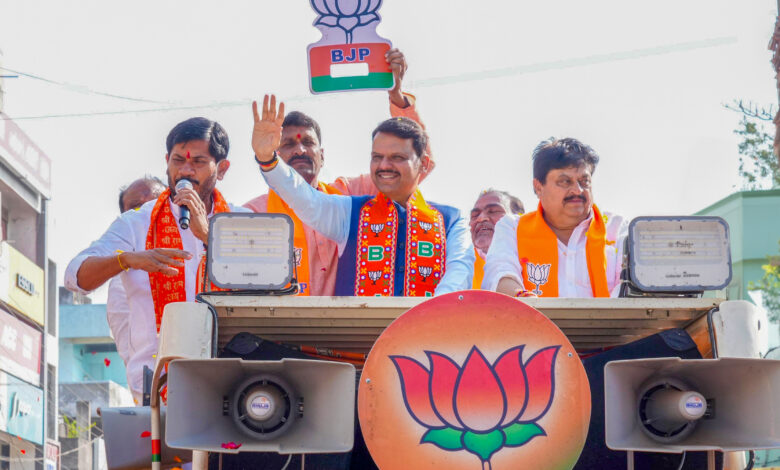
Mumbai, Feb 12 (IANS) Following the municipal elections, the BJP has achieved a decisive victory in the Zilla Parishad and Panchayat Samiti elections. With this win, the party appears to have launched a massive exercise to achieve an ambitious goal of ‘Shat Pratishat BJP’ (100 per cent BJP) for the 2029 Assembly elections. This strategy seems to have been formulated in light of the appeal made by Union Home Minister Amit Shah.
Although the next major election in the state is nearly three and a half years away, the party has sent a clear message to its workers to continue working hard. BJP State President Ravindra Chavan stated, “Work in the BJP continues 24/7; there is no rest here. The results of the urban and local self-government bodies will boost our workers’ confidence, and they will enter the field with even greater determination.”
A senior BJP leader mentioned that while the goal of gaining a majority in the state on its own is challenging, it is not impossible. Currently, the party’s vote share is around 26-27 per cent. To reach this target, an additional increase of 10 to 15 per cent is required. He explained, “The party’s target for the 2029 Assembly elections is to win more than 150 out of 288 seats. The majority mark is 145, and the party is currently only 13 seats away from it.”
The BJP leader’s statement is important as the party contested the 2024 Assembly elections and the recent local body elections as part of the Mahayuti alliance. If it contests independently, the dynamics will change. Converting this local body success into Assembly votes, however, remains the primary challenge.
According to the data released by the State Election Commission, in recent elections, the BJP has successfully shed its “urban-centric” image. The party has made significant inroads into several strongholds of the Congress party and both factions of the NCP.
Out of 288 Assembly constituencies in the state, 160 are in rural areas. In the Zilla Parishad results announced on Monday, the BJP emerged as the largest party in six out of 12 Zilla Parishads, including Sindhudurg (Konkan), Satara (Western Maharashtra), Solapur (South-West Maharashtra), and Parbhani, Dharashiv, and Chhatrapati Sambhajinagar (Marathwada).
Furthermore, the BJP also dominated the Panchayat Samiti results. Out of 125 Panchayat Samitis, the party won a clear majority in 55, followed by Shiv Sena 26 seats, NCP 25 seats, while opposition (Maha Vikas Aghadi) comprising Congress and NCP (Sharad Pawar faction) were restricted to eight seats each, while Uddhav Thackeray’s Shiv Sena won only three.
Reacting to the victory in 12 zilla parishad and 125 panchayat samiti elections, Chief Minister Devendra Fadnavis stated that the public has voted for the development work done by the Central and state governments. He remarked, “The opposition lacked political will and seemed disconnected from the people. They failed to raise the issues of the grassroots, which made the BJP’s victory easier.”
According to the party sources, to strengthen the party’s grip across 355 talukas and approximately 28,000 villages, booth-level workers were given a target of securing 50 per cent of the votes at nearly one lakh booths across the state. For the BJP, these local body elections were crucial because, despite success in the Assembly and Lok Sabha, the party had historically struggled in rural areas.
The concept of a “full majority on its own” was first proposed in 2005. While the demand grew after the first alliance government with the undivided Shiv Sena, the dominance of the Congress-NCP in rural Maharashtra had kept this dream unfulfilled. Since 2014, the BJP has consistently expanded its base. Despite changing alliances, the party emerged as the largest single party in 2014, 2019, and 2024, winning 122, 105, and 132 seats, respectively. The splits in the Shiv Sena and NCP have significantly benefited the BJP.
BJP spokesperson Keshav Upadhye commented that Uddhav Thackeray joined the Congress-NCP alliance for power, abandoning Hindutva, which is why the public rejected him. Furthermore, the Zilla Parishad results suggest that Sharad Pawar’s grip on the Maratha leadership in Western Maharashtra’s sugar belt is weakening, with his faction emerging as the largest party only in Sangli and remaining limited to Pune and Kolhapur.